Embroidery Basics
What Is a HUS File? Complete Guide to the Husqvarna Viking Format
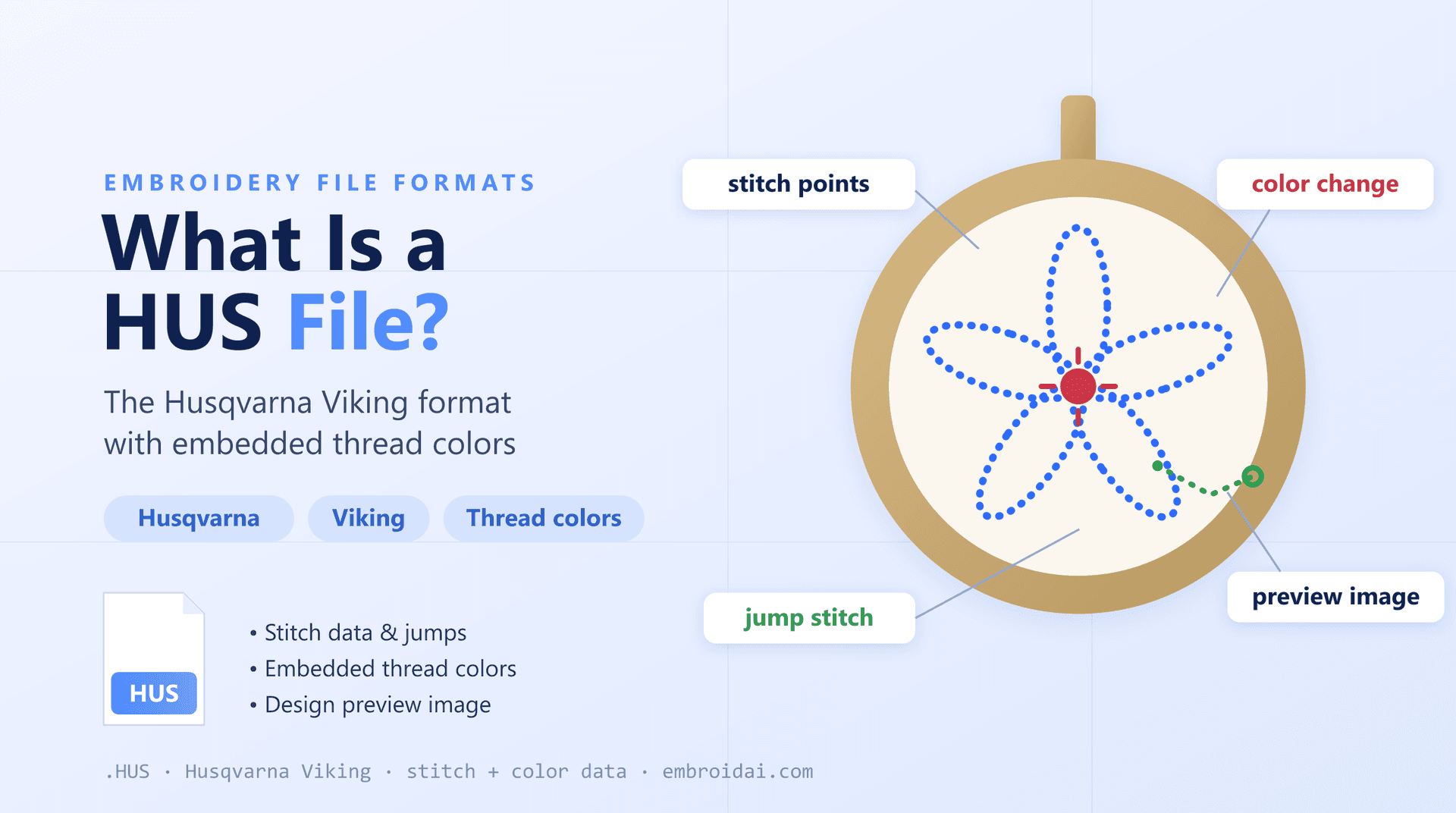
If you own an older Husqvarna Viking embroidery machine, or you've downloaded a design pack that includes a .hus file, you may be wondering what this format is and how to use it. The HUS format is the classic native embroidery format for Husqvarna Viking machines, and unlike the widely used DST format, it remembers its own thread colors.
In this guide you'll learn what a HUS file is, what data it stores, its advantages and disadvantages, which machines can read it, and how to open, view, and convert HUS files.
What Is a HUS File?
A HUS file is a machine embroidery file format developed for Husqvarna Viking embroidery machines. It was one of the original home-embroidery design formats and was used widely across the Viking software and machine ecosystem for many years.
Like other embroidery formats, a HUS file does not store a picture made of pixels. Instead, it stores the instructions an embroidery machine needs to sew a design — but it goes further than a stripped-down format like DST by also saving the design's thread colors.
A HUS file typically contains:
- Stitch coordinates that define the sewing path
- Jump stitches between separate areas of the design
- Color change commands
- Embedded thread color information
- Trim commands
- A small preview image of the finished design
Because it stores colors and a preview, a HUS design opens looking the way the digitizer intended, rather than in placeholder colors.
Advantages of the HUS Format
For the machines it was built for, the HUS format has some clear strengths:
- Stores thread colors, so designs open with their intended palette
- Includes a built-in preview image of the finished design
- Compressed file structure keeps designs reasonably small
- Native support on Husqvarna Viking machines for reliable stitching
- Widely available in older design libraries and collections
For a Viking owner, the biggest day-to-day benefit is convenience: you don't have to reassign thread colors every time you open a design.
Disadvantages of the HUS Format
The HUS format also has real limitations, most of which come from its age:
- It is largely a legacy format — newer machines prefer VP3
- Limited compatibility outside the Husqvarna Viking and Pfaff family
- Not as widely supported by third-party software as DST or PES
- Older designs may cap the number of colors or stitches they store
- Sharing a HUS file with someone on a different machine usually means converting it first
In short, HUS is excellent within its own ecosystem but awkward to hand off to the wider embroidery world, where DST is the universal trade format.
Compatible Machines
HUS is closely tied to the Husqvarna Viking and Pfaff brands, which share a parent company. It is commonly read by:
- Older Husqvarna Viking home embroidery machines
- Many Pfaff embroidery machines from the same era
- Viking and Pfaff embroidery software
- Third-party embroidery programs that support the HUS format
Newer Husqvarna Viking and Pfaff machines have largely moved to the VP3 format, which is the richer, more modern successor. If your machine is recent, check whether it prefers VP3 — though many still accept HUS for backward compatibility.
What Information Does a HUS File Store?
It helps to think of a HUS file as stitch data plus a color recipe.
Stitch Data
Every needle penetration is stored as coordinates that define the exact path the machine sews.
Thread Colors
The file records which colors to use and where they change, so the design displays and stitches in its intended palette.
Jump Stitches and Trims
Commands tell the machine when to move without stitching and when to cut the thread between sections.
Preview Image
A small embedded thumbnail lets machines and software show the design before it is stitched.
How to Open a HUS File
There are three practical ways to open a HUS file:
On a Husqvarna Viking Machine
Compatible Viking (and many Pfaff) machines read HUS files directly from a USB stick or connected media.
In Embroidery Software
Viking and Pfaff software, along with many third-party embroidery programs, can open and edit HUS designs.
In an Online Embroidery Viewer
The quickest way to just look at a design is a free online viewer. Upload the file and preview the stitches, colors, and dimensions directly in your browser — no software to install. Our free embroidery viewer is a fast way to inspect a design before you stitch it.
How to Convert a HUS File
Because HUS is a legacy format, converting it is one of the most common things owners need to do — usually so a design can be stitched on a non-Viking machine or shared with someone else.
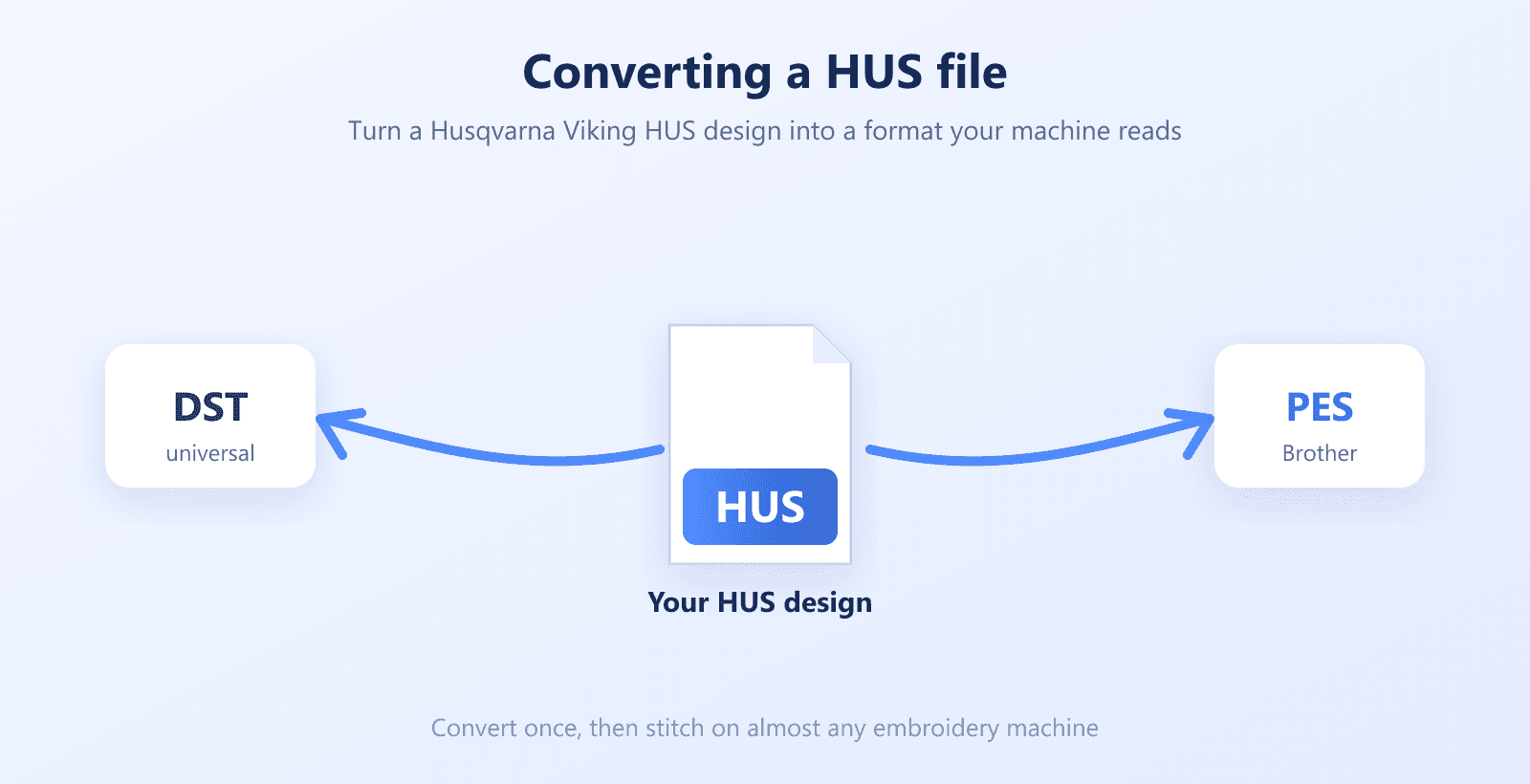
The two most useful conversions are:
- HUS to DST — the universal format read by virtually every embroidery machine
- HUS to PES — for Brother and Baby Lock machines
Because a HUS file already contains real stitch data, converting it is direct — you are re-packaging existing stitches into another format, not re-digitizing artwork from scratch. Note that converting to a color-less format like DST will drop the thread color information, so keep a copy of your original HUS (or a PES) if you want the colors preserved.
View and inspect your embroidery designs free
Preview stitches, colors, and dimensions right in your browser — no software, no account.
HUS vs DST: What's the Difference?
The clearest way to understand HUS is to compare it with DST, the universal embroidery trade format:
| HUS File | DST File |
|---|---|
| Husqvarna Viking native format | Universal Tajima format |
| Stores thread colors | No thread colors stored |
| Includes a preview image | No preview image |
| Legacy / older machines | Read by almost every machine |
| Limited outside Viking/Pfaff | Industry-wide compatibility |
For a deeper look at how the universal format works and where it differs from color-aware formats, see our guides on the DST format and DST vs PES.
Frequently Asked Questions
HUS is the file extension for the Husqvarna embroidery format, the native design format created for Husqvarna Viking embroidery machines. The letters come from the Husqvarna brand name rather than an acronym.
HUS is the classic native format for older Husqvarna Viking home embroidery machines, and it is also read by many Pfaff machines from the same parent company. Newer Viking and Pfaff models have largely moved to the VP3 format.
Yes. Unlike the DST format, a HUS file stores its own thread color information along with the stitch data, so the design opens with its intended colors instead of placeholder ones.
You can open a HUS file on a compatible Husqvarna Viking machine, in embroidery software that supports the format, or by uploading it to a free online embroidery viewer to preview the stitches in your browser.
Yes. Embroidery software and online converters can convert a HUS file to DST, PES, and other formats. Because HUS already contains real stitch data, converting it is straightforward and does not require re-digitizing.
No. Both come from the Husqvarna Viking and Pfaff family, but HUS is the older format while VP3 is the newer, richer one. Modern machines usually prefer VP3, though many still read HUS.
Conclusion
The HUS format is a classic, color-aware embroidery format built for Husqvarna Viking machines. It stores stitch data, thread colors, and a preview image, which makes it convenient inside the Viking and Pfaff ecosystem — but its age means limited compatibility elsewhere, and newer machines increasingly favor VP3.
If you have a HUS design you want to stitch on another machine or share with someone else, converting it to DST or PES is quick and reliable. And whenever you just need to check what a design looks like, a free online viewer is the fastest way to preview it before you thread your machine.