Embroidery Guides & Resources
Tutorials and deep dives on machine embroidery, the DST file format, digitizing, and getting the cleanest results from your designs.
 Embroidery Basics
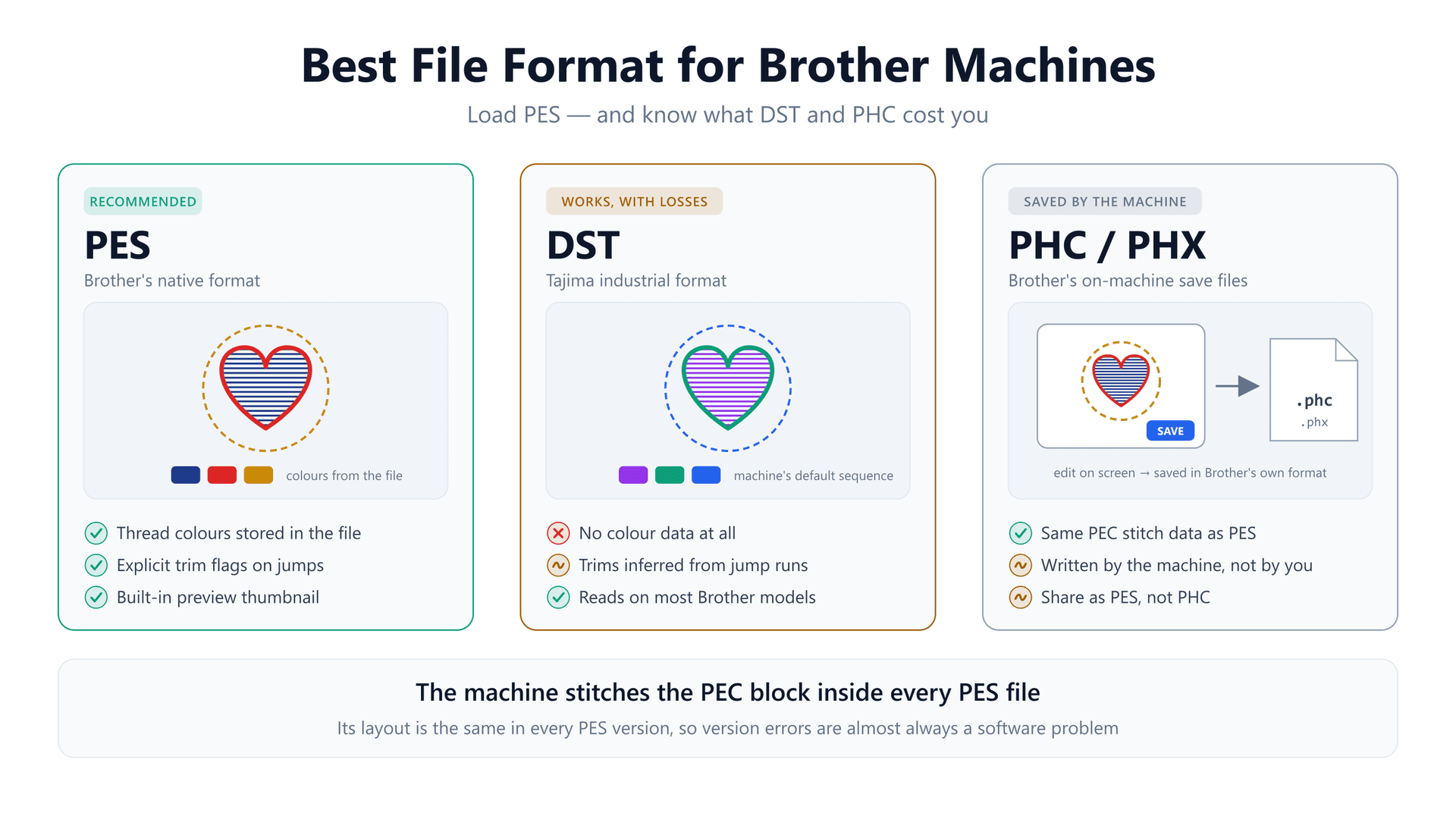
Best File Format for Brother Embroidery Machines (PES vs DST vs PHC)
The short answer is PES — but the useful part is why. A Brother machine only reads one block inside a PES file, which explains why DST loads in the wrong colours, why PES version errors are a software problem, and what to check when a file won't load.
11 min readRead article Embroidery Basics
How Does Auto Digitizing Work? Inside the Image-to-Stitch Pipeline
Auto digitizing isn't one magic step — it's six rule-based decisions, and the one that matters most is measuring each shape in millimetres. Know the rules and you can predict, and prevent, most bad results.
11 min readRead article Embroidery Basics
The 6 Types of Underlay in Embroidery — and How to Pick the Right One
Most guides list the underlay types and stop there. The useful question is which one to pick, and the answer is not taste — it falls out of the width of the shape and the direction the top stitch runs.
12 min readRead article Tutorials
How to Convert SVG to DST: A Complete Walkthrough
Your SVG is already vector, so the hard part should be done. It isn't — a path has no width, no order and no stitch type. Here is what gets generated, what gets silently dropped, and how to read the plan before you waste a garment.
13 min readRead article Embroidery Basics
What Is an EMB File? The Complete Guide to Wilcom's Native Format
Your machine will never stitch an EMB, and that is the point. It is the editable master — outlines, density, underlay and named threads — while a DST is just the flattened result. Here is what is inside one, and why you should always ask your digitizer for it.
12 min readRead article Tutorials
Cross Stitch on an Embroidery Machine: The Complete Guide
The chart tells you 140 by 140. It never tells you how big that is. Fabric count is the exchange rate, and picking it wrong is why designs overflow the hoop, drift out of square, or run for two hours.
13 min readRead article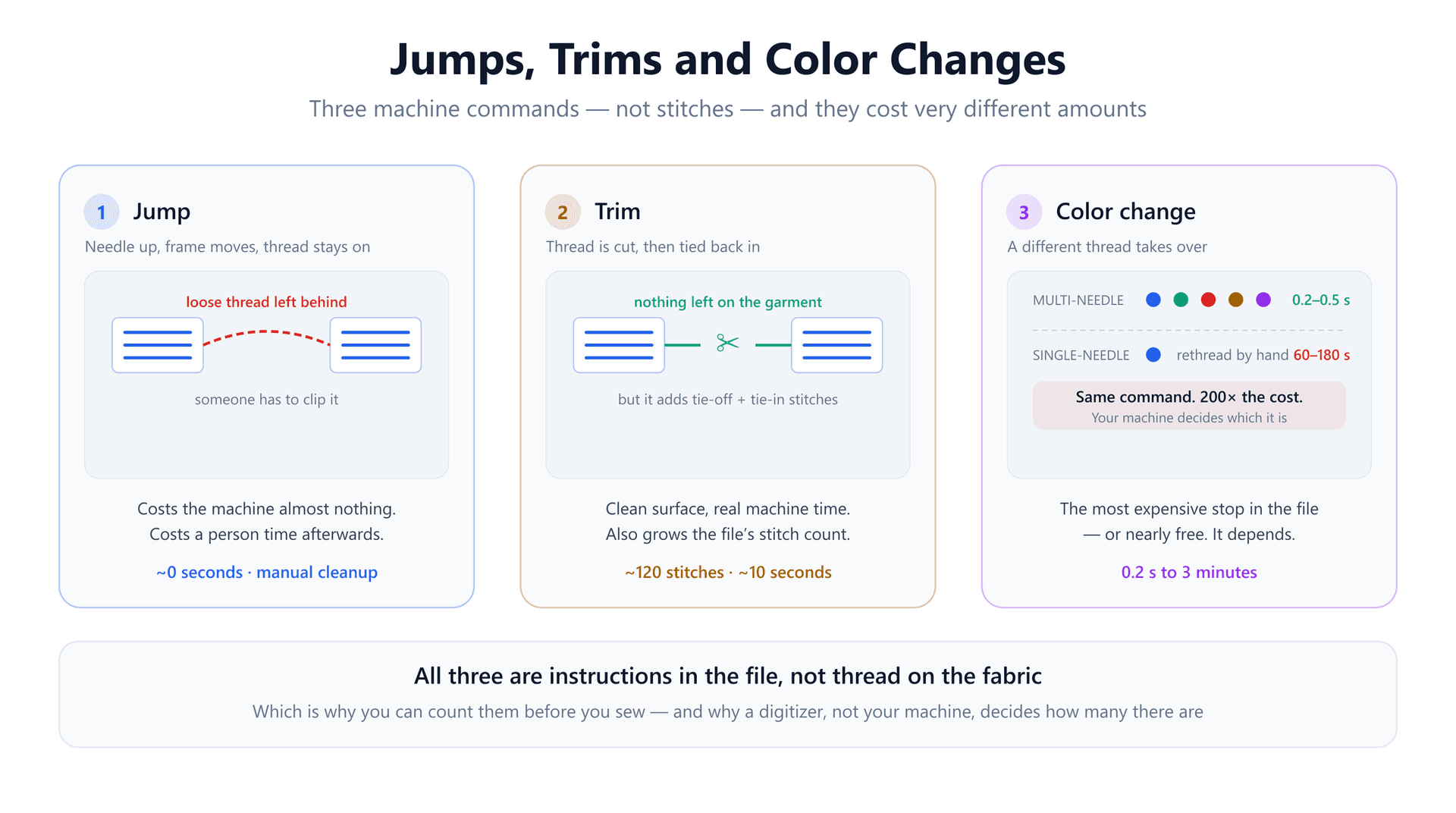 Embroidery Basics
What Are Jumps, Trims and Color Changes in Embroidery?
These three are not stitches — they are instructions telling the machine to stop stitching. That distinction explains why they cost what they cost, why your analyzer's jump count looks wrong, and why the same file behaves differently on two machines.
12 min readRead article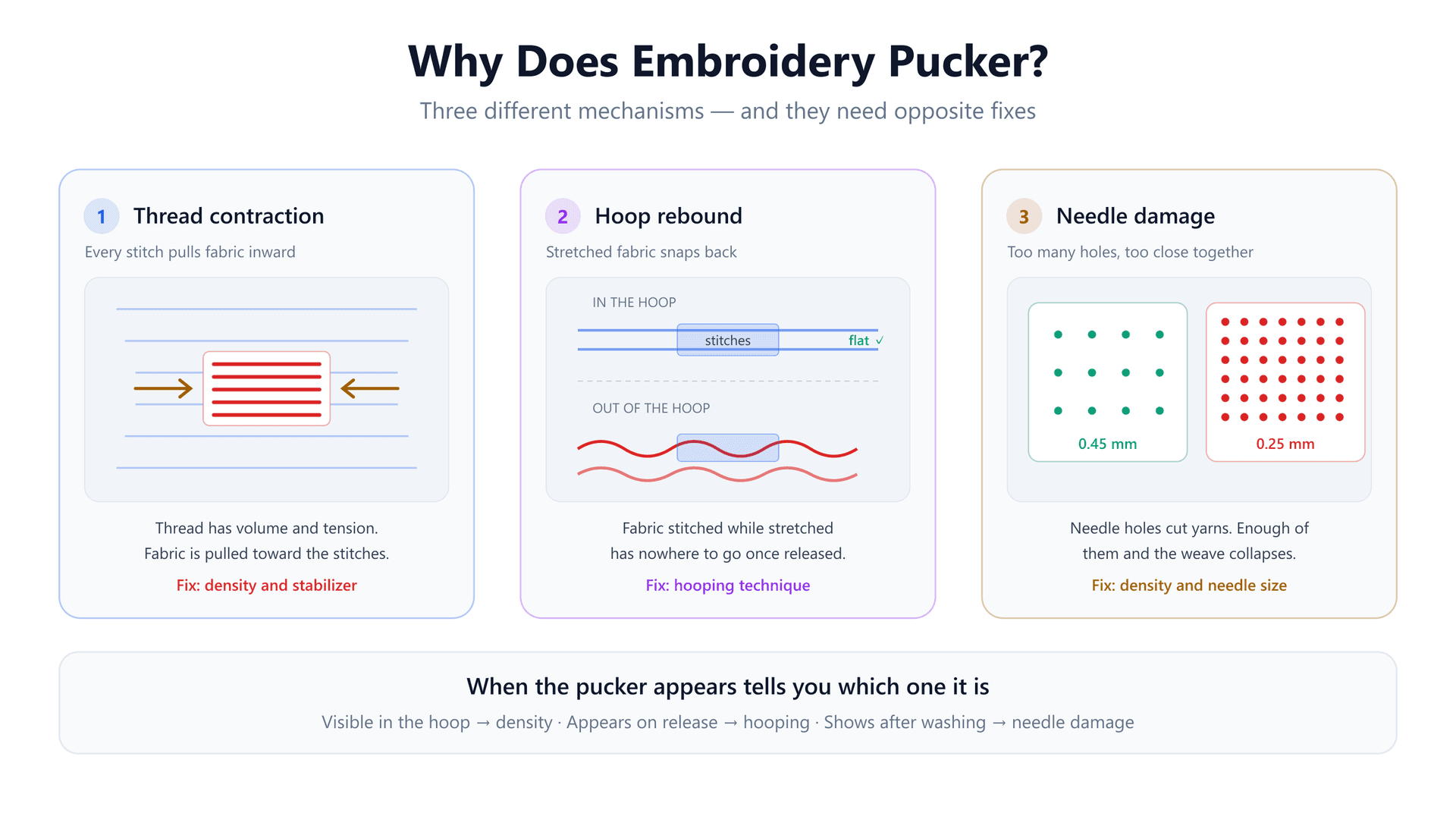 Embroidery Basics
Why Does Embroidery Pucker? Causes and Solutions
Puckering is not one problem — it is three, and they need opposite fixes. The clue is not what the pucker looks like but when it showed up: in the hoop, on release, or after the first wash. Here is how to read that.
12 min readRead article Embroidery Basics
What Is Embroidery Pathing? How Stitch Order Works
Two files can hold identical stitches and run minutes apart. The difference is pathing — the order elements are sewn and the route the needle takes between them. Here is how that order is decided, and what it costs when it is wrong.
12 min readRead article Embroidery Basics
What Is Stitch Density in Embroidery? A Practical Guide With Numbers
Density is the one setting that decides whether a design looks rich or ruins the garment. Here is what the number actually measures, the values that work on each fabric, and why tightening it is usually the wrong fix.
12 min readRead article Comparisons
Running vs Satin vs Fill Stitch: How to Choose (With Real Numbers)
Most guides tell you satin is for lettering and fill is for big shapes. That is a description, not a decision rule. Here is the measurement that actually picks the stitch — and the width thresholds where each one starts to fail.
12 min readRead article Embroidery Basics
What Is Underlay in Embroidery? The Invisible Stitches That Decide Everything
Every professional embroidery design starts with stitches you will never see. Underlay stabilizes the fabric, lifts the design off the surface, and decides whether your satin looks crisp or sinks into the cloth. Here's what it is and how to choose it.
12 min readRead article Embroidery Basics
Why Your Satin Stitches Pucker on Knit Fabric (And How to Stop It)
Puckering on a t-shirt or polo is not bad luck — it's physics. A satin column pulls inward as it stitches, and a knit has nothing holding it in place. Here's what actually causes it, and the order to fix it in.
11 min readRead article Embroidery Basics
What Is Machine Embroidery? A Complete Beginner's Guide for 2026
Machine embroidery turns a digital design into thread on fabric — automatically, at over a thousand stitches a minute. Here's how it works end to end: digitizing, stitch types, file formats, stabilizers, machines, and what it costs to start.
12 min readRead article Embroidery Basics
Embroidery Thread Tension Guide: Fix Looping, Puckering & Thread Breaks
Most embroidery problems — bobbin thread on top, loops, thread breaks, puckering — come down to tension. Here's how to balance your top and bobbin thread using the 1/3 rule, the letter-I test, and simple quarter-turn adjustments.
11 min readRead article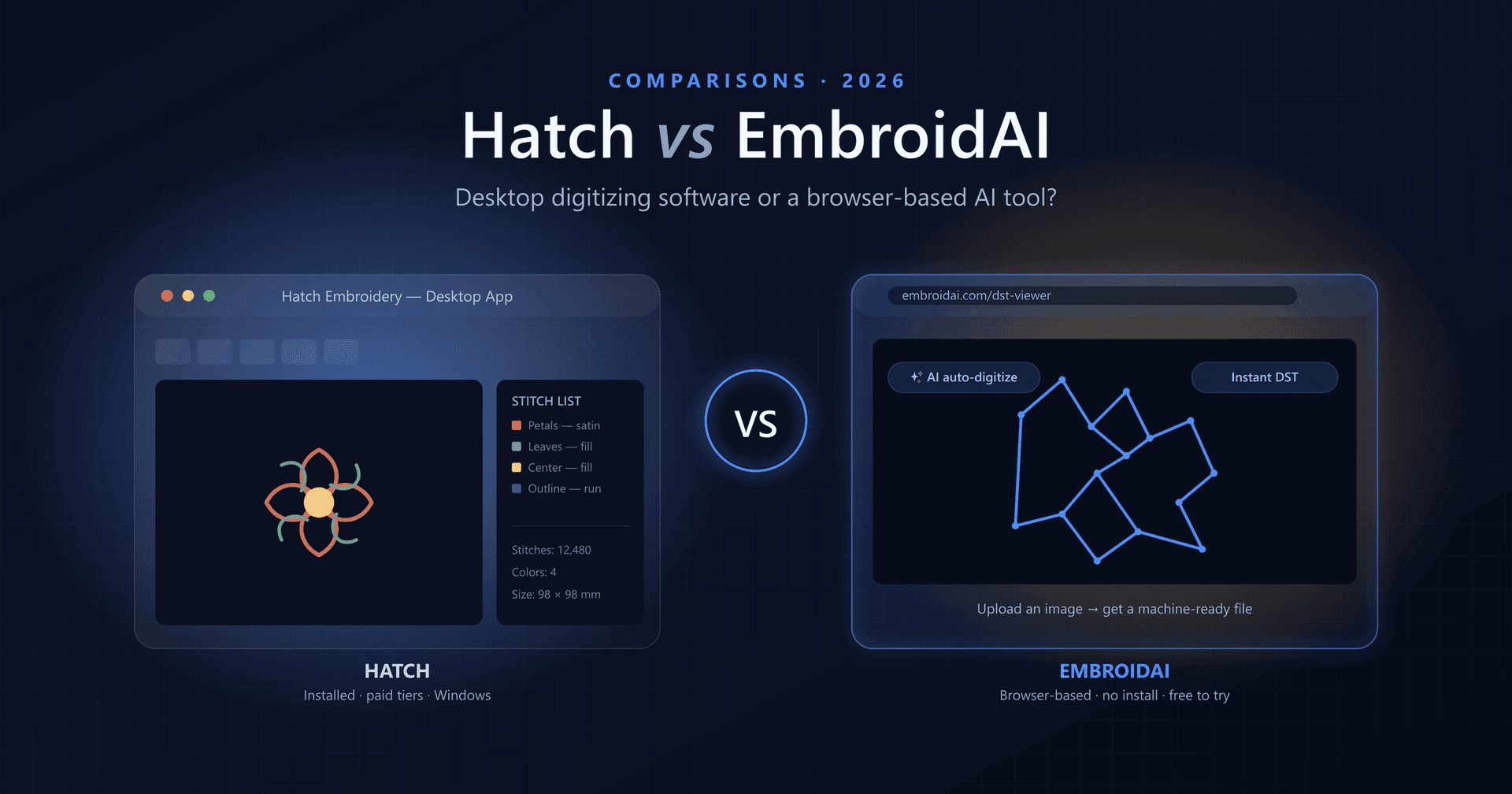 Comparisons
Hatch vs EmbroidAI: Which Embroidery Digitizing Tool Should You Use in 2026?
Hatch is powerful desktop digitizing software; EmbroidAI is a browser-based AI tool that turns an image into a machine-ready file in seconds. Here's a clear, side-by-side comparison of price, learning curve, features, and who each one is really for.
10 min readRead article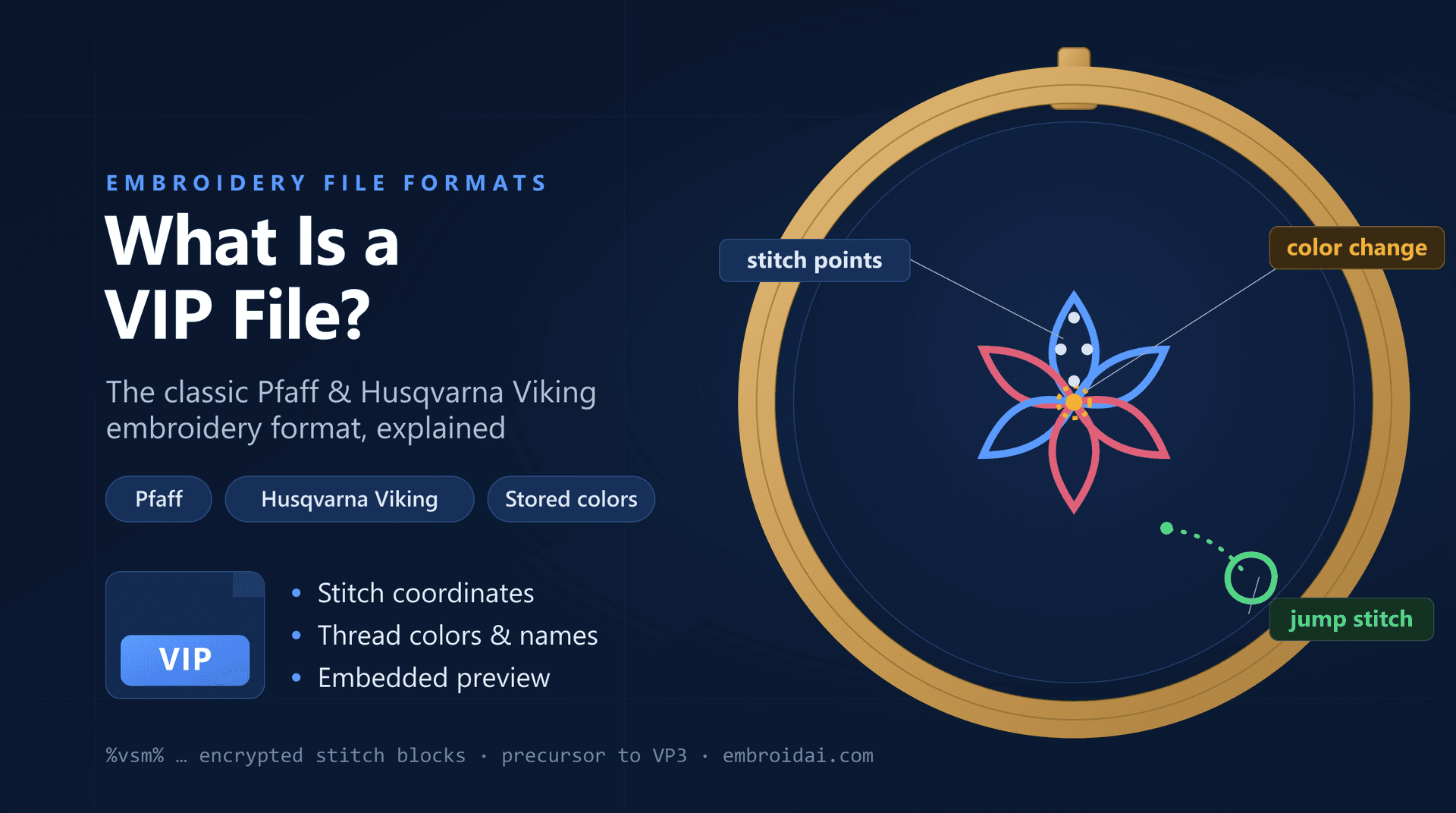 Embroidery Basics
What Is a VIP File? Complete Guide to the Pfaff & Husqvarna Viking VIP Format
VIP is the classic native format for Pfaff and Husqvarna Viking machines — the color-aware predecessor to VP3. Here's what a VIP file contains, how it differs from VP3, DST, and PES, and how to open, view, and convert one.
9 min readRead article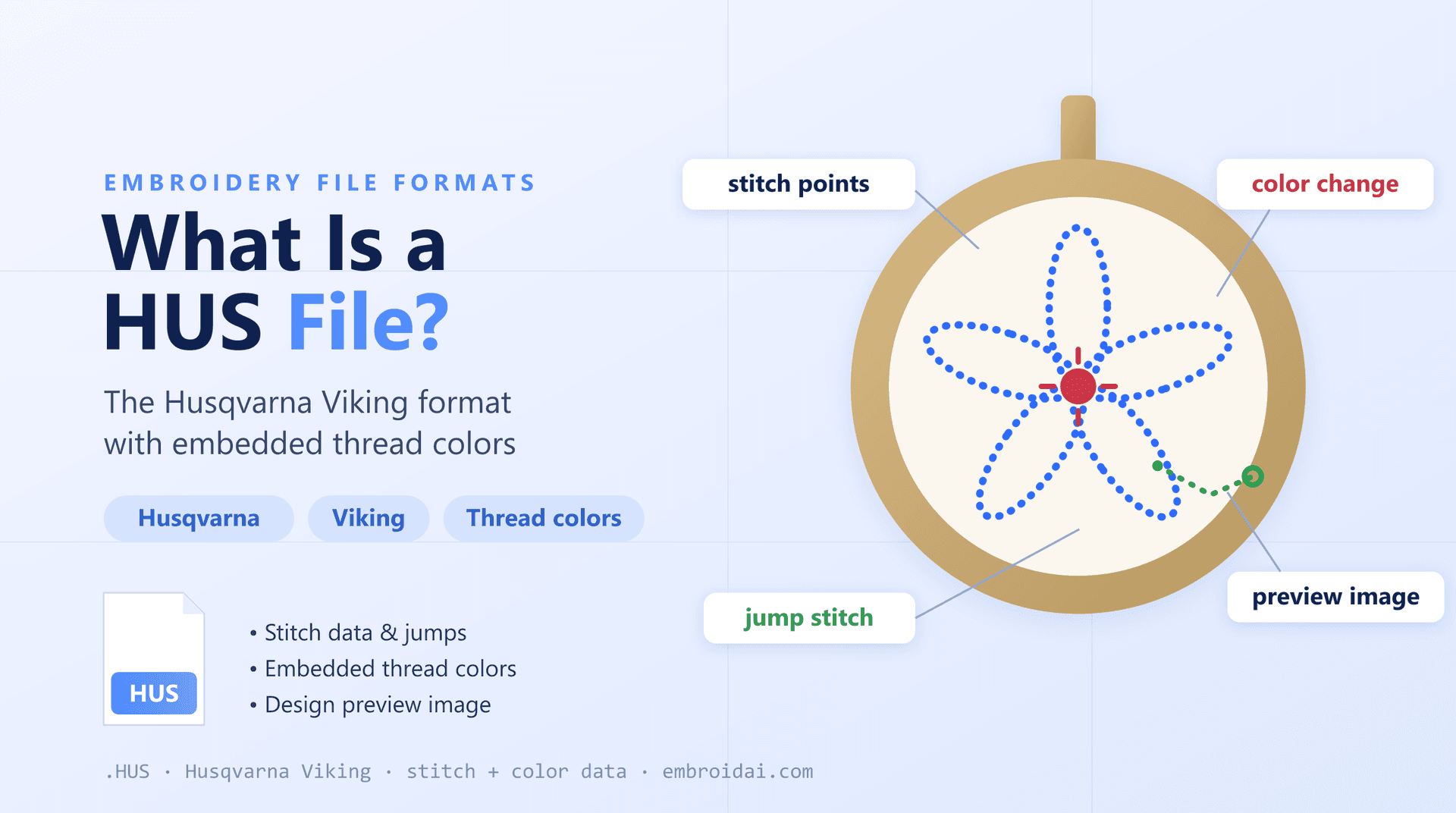 Embroidery Basics
What Is a HUS File? Complete Guide to the Husqvarna Viking HUS Format
HUS is the classic native format for Husqvarna Viking embroidery machines — and unlike DST, it stores its own thread colors. Here's what a HUS file contains, its pros and cons, which machines read it, and how to open, view, and convert one.
9 min readRead article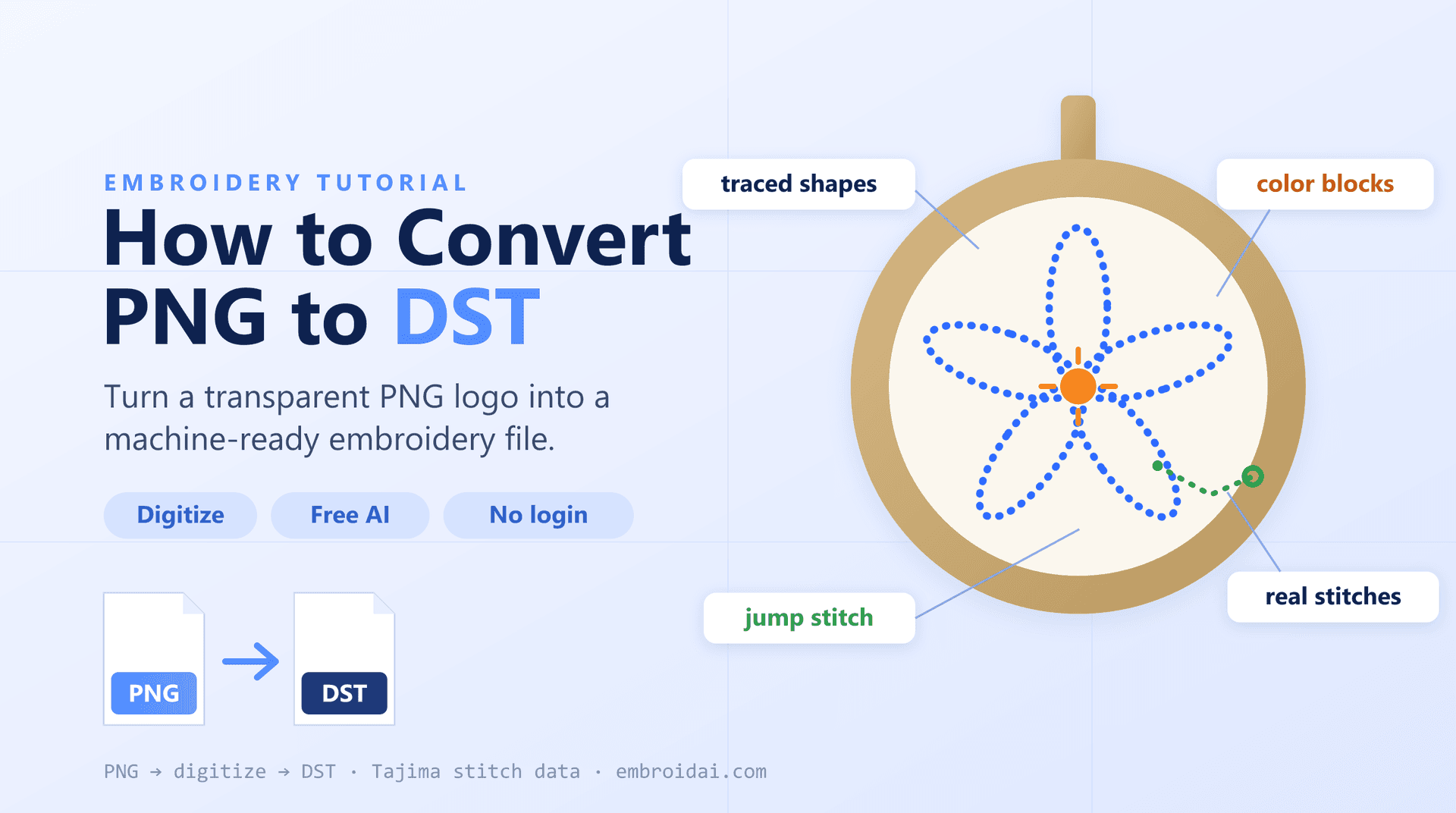 Tutorials
How to Convert PNG to DST: A Step-by-Step Embroidery Guide
Got a PNG logo you want to stitch? You can't just rename it to .dst — a PNG is pixels and a DST is stitches. Here's exactly how to convert PNG to DST online, which images work best, and how to get clean, machine-ready results.
11 min readRead article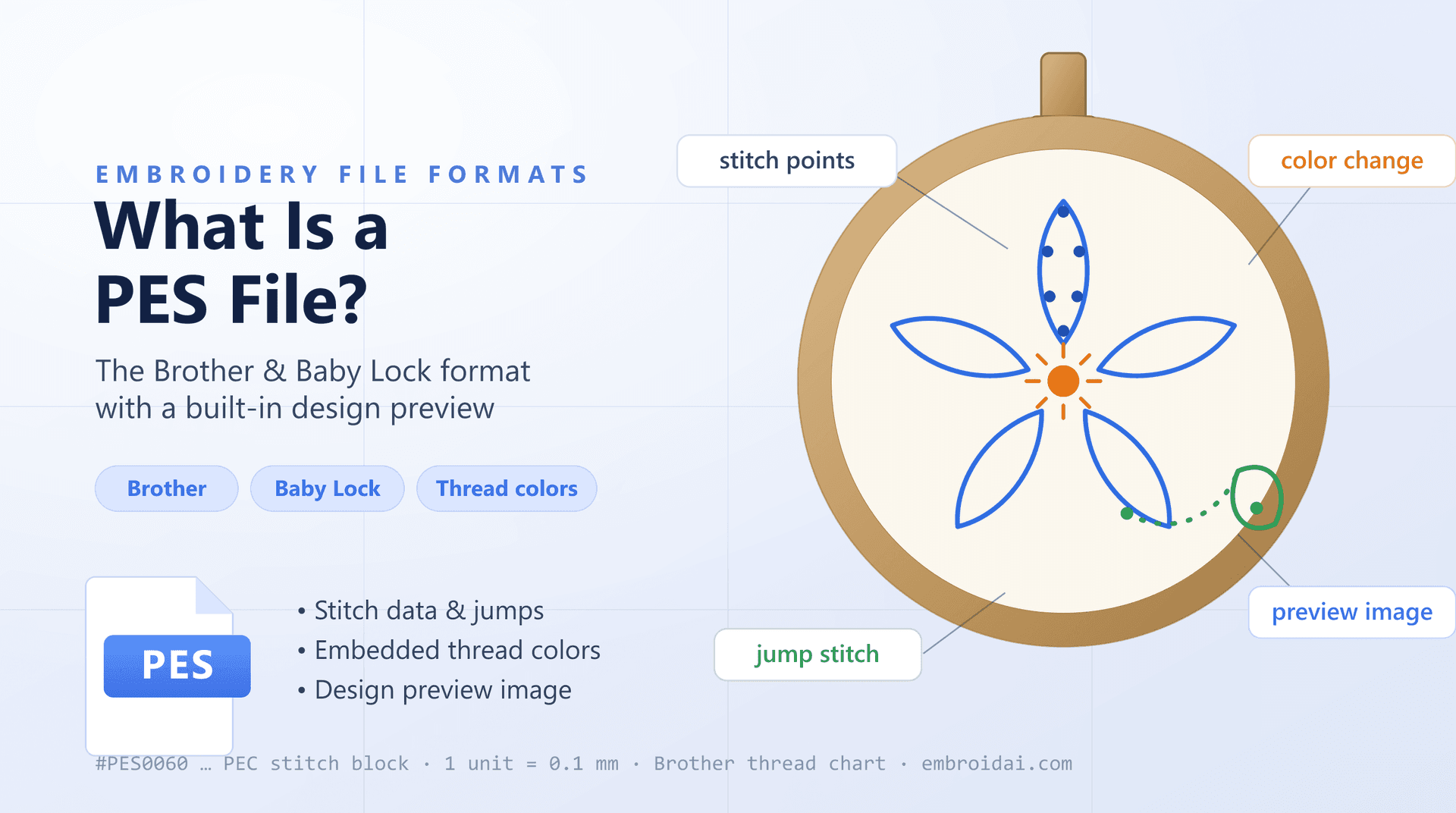 Embroidery Basics
What Is a PES File? Complete Guide to the Brother PES Embroidery Format
PES is the native embroidery format for Brother and Baby Lock machines — and unlike DST, it stores thread colors and a built-in design preview. Here's what a PES file contains, how it differs from DST and JEF, and how to open, view, and convert one.
9 min readRead article Embroidery Basics
What Is a VP3 File? Complete Guide to the Pfaff & Husqvarna Viking VP3 Format
VP3 is the rich native format for Pfaff and Husqvarna Viking machines — and unlike DST, it stores thread colors, metadata, and even a preview. Here's what a VP3 file contains, how it differs from DST and PES, and how to open, view, and convert one.
8 min readRead article Embroidery Basics
What Is a JEF File? Complete Guide to the Janome JEF Embroidery Format
JEF is the native embroidery format for Janome machines — and unlike DST, it remembers its thread colors. Here's what a JEF file contains, how it differs from DST and PES, and how to open, view, and convert one.
8 min readRead article Embroidery Basics
What Is an EXP File? Complete Guide to the Melco EXP Embroidery Format
EXP is the expanded stitch format used by Melco and Bernina embroidery machines. Here's what an EXP file contains, how it differs from DST and PES, and how to open, view, and convert one.
8 min readRead article Tutorials
Text to Embroidery: How to Turn Words into a Machine-Ready DST or PES File
Want to stitch a name, monogram, or label without paying a digitizer? Here's how a text-to-embroidery generator turns typed words into a machine-ready DST or PES file in seconds — plus tips for clean, readable lettering.
9 min readRead article Embroidery Basics
DST vs PES: What's the Difference Between These Embroidery Files?
DST or PES — which embroidery file do you need? A clear, side-by-side comparison of the two most common machine formats: what each stores, thread colors, machine compatibility, and when to use each.
8 min readRead article Embroidery Basics
Demystifying Punching Digitizing: The Art Behind Flawless Embroidery
Why is embroidery digitizing still called punching? A look at the history, the step-by-step digitizing process, stitch types, and why professional punching beats auto-digitizing.
7 min readRead article Comparisons
Best DST Viewer in 2026: EZStitch Digitizing vs EmbroidAI
EZStitch Digitizing vs EmbroidAI: a side-by-side look at interface, stitch and jump-stitch visualization, mobile support, and zoom performance to help you pick the right DST viewer in 2026.
6 min readRead article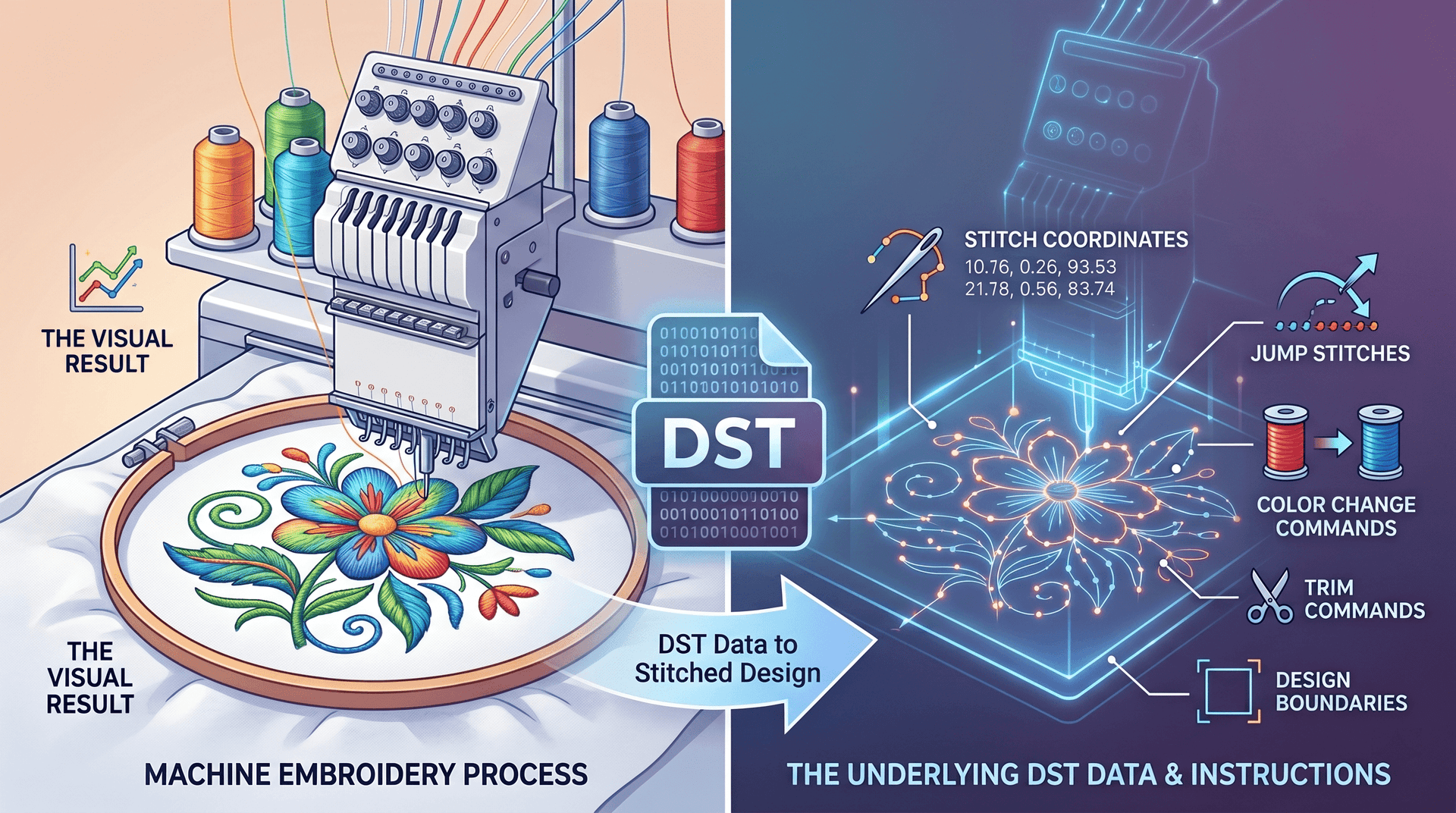 Embroidery Basics
What Is a DST File? Complete Guide to the Embroidery DST Format
DST is the most widely used machine embroidery format in the industry. Here's what a DST file is, what it contains, and how to open and view one online.
7 min readRead article